
Many SMSF conversations still follow a familiar sequence: the client raises a strategy or structure idea, tax and compliance are worked through, and only later does borrowing feasibility enter the picture.
For SMSF-active client bases, that “tax/structure-first, lending-later” order is increasingly where predictable friction starts. Not because the structure work is wrong—but because lending constraints and execution realities often become the gating item that forces late-stage redesign. The result is avoidable rework, stretched timelines, mismatched expectations, and frustration right when your team is trying to finalise decisions.
Bringing lending feasibility forward doesn’t mean “recommending an SMSF” or stepping outside your role. It means pressure-testing the borrowing pathway early enough that structure, timing, evidence requirements, and stakeholder coordination stay aligned.
1) Why “tax/structure-first, lending-later” creates downstream friction
It’s natural for the conversation to begin with tax, contribution strategy, and structural suitability—especially when a client flags an SMSF property purchase or restructure.
The issue is that SMSF borrowing isn’t a simple add-on. If feasibility is tested late, lender requirements can force material changes to how the strategy is executed, creating:
Rework and reversals
A structure that looks clean on paper may need adjustment once servicing expectations, documentation, and timing are understood.
Timeline blowouts
Clients often anchor on property and settlement timing. If evidence and approvals take longer than assumed, decision windows compress and stress increases across all parties.
Expectation mismatch
Clients may hear “the strategy is sound” as “finance will be straightforward.” Late feasibility checks can create a credibility gap the firm then has to manage.
Avoidable execution risk
When the borrowing pathway is unclear, scope boundaries blur and dependencies get missed between adviser, accountant, solicitor/conveyancer, auditor, and lending parties.
Leaving feasibility too late turns what should be a planning conversation into an execution rescue.
2) What’s changing in the dynamic—and what it means for timing
Without overstating policy certainty, many clients are asking earlier and broader questions due to general pressure around tax, structures, and long-term planning. As a result, accountants are increasingly fielding “could we do this in the SMSF?” well before a borrowing decision is fully formed.
That shift creates an opportunity: if feasibility is brought in when borrowing intent first appears, you can help clients (and other advisers) calibrate what’s realistic before anyone commits to:
A specific asset or price point
A contribution or cashflow plan that doesn’t match lender expectations
A timeline that assumes approvals and documentation will be minimal
Stakeholder sequencing that creates bottlenecks later (for example, leaving document readiness until a contract is already signed)
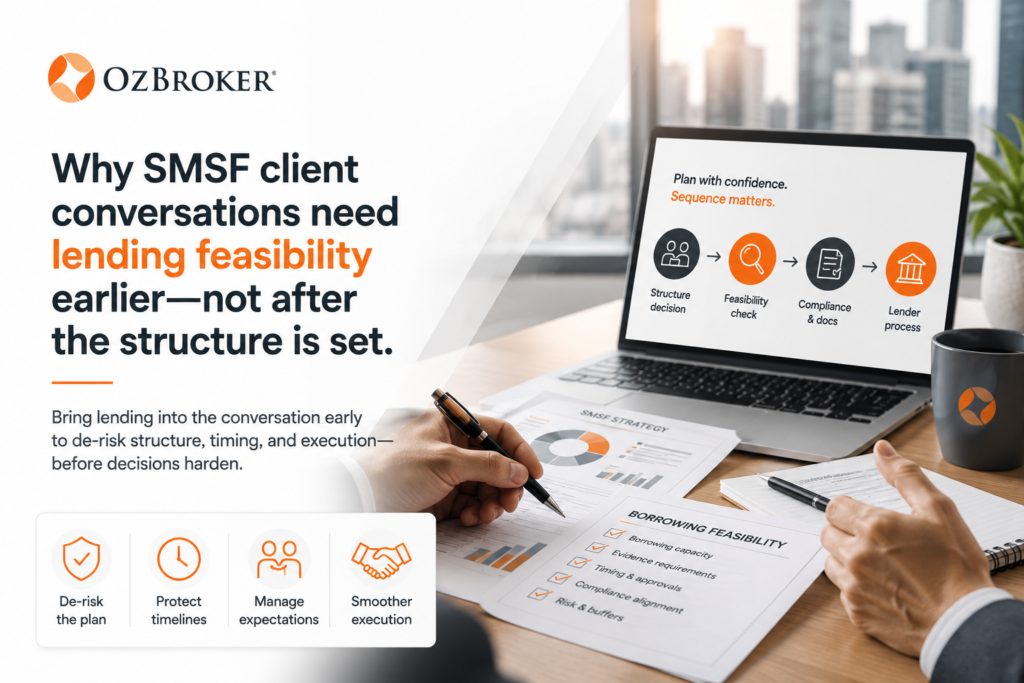
Practical takeaway: when a client hints at borrowing, treat feasibility as a parallel workstream to structure and strategy—not a downstream step.
3) A practical framing accountants can use (without losing role boundaries)
You don’t need to become a lender, and you shouldn’t be pushed into giving lending views. The goal is an early feasibility checkpoint that protects the client plan—and protects your advisory time.
Suggested client framing: “Before we lock in any SMSF structure or timeline assumptions, we should pressure-test the borrowing pathway at a high level. That helps confirm what’s possible, what evidence will be needed, and how long it may take. Then we can finalise the strategy with fewer surprises.”
This keeps role boundaries clear across:
Tax and strategy advice (your role)
Legal structuring and documentation (solicitor/conveyancer and other specialists)
Feasibility input and lender requirements (lending specialist)
Execution and lender coordination (broker/lender)
To make the early feasibility check practical, a light checklist can help before anyone goes deep:
Intended asset: type, location, indicative price range, new vs established
Contribution strategy: what’s realistic and sustainable (including buffers)
Member profile: employment type, income stability, existing liabilities
Cashflow and liquidity: expected holding costs, contingency buffers
Timing expectations: intended purchase window and tolerance for delays
Documentation readiness: financials, tax returns, SMSF documents, and relevant existing structure documents
Key third parties: auditor, solicitor/conveyancer, financial adviser, and who is coordinating what
Even this level of upfront clarity can reduce back-and-forth later by aligning expectations with what the lending process typically requires.
Where OzBroker fits (as a support option for your firm)
OzBroker specialises in SMSF and investment-focused lending support and works with accountants and financial advisers on complex lending scenarios. If you’re seeing more SMSF structure discussions where borrowing may be part of the end-state, an early feasibility check can help de-risk the plan before decisions harden.
If it’s helpful, bring OzBroker into the conversation earlier—when a structure review, strategy shift, or borrowing intent first appears. The aim is to pressure-test feasibility and constraints early, so your SMSF advice pathway stays cleaner, timelines are more realistic, and execution handoffs are smoother.